
If you walk into a big-box store today, you will see a wall of colorful, futuristic-looking plastic machines. They have clear bins that proudly display the dirt they've collected, like a trophy case for filth. These are bagless vacuums, and they have taken over the world.
But here is the uncomfortable truth that marketing departments don't want you to know: Bagless vacuums are kind of gross.
We have analyzed the data, the costs, and the literal dust clouds to settle the debate once and for all.
The Bagless Lie: "No Recurring Costs"
The biggest selling point of bagless vacuums is that you don't have to buy bags. "Save money!" they scream. "Never buy a bag again!"
This is technically true, but it is also a lie by omission.
Bagless vacuums rely on filters to keep the dust inside the bin. Because there is no bag to act as a primary filter, the actual filters get slammed with fine dust every single time you clean. To keep the suction strong, you have to wash these filters monthly. But eventually, washing isn't enough. You have to replace them.
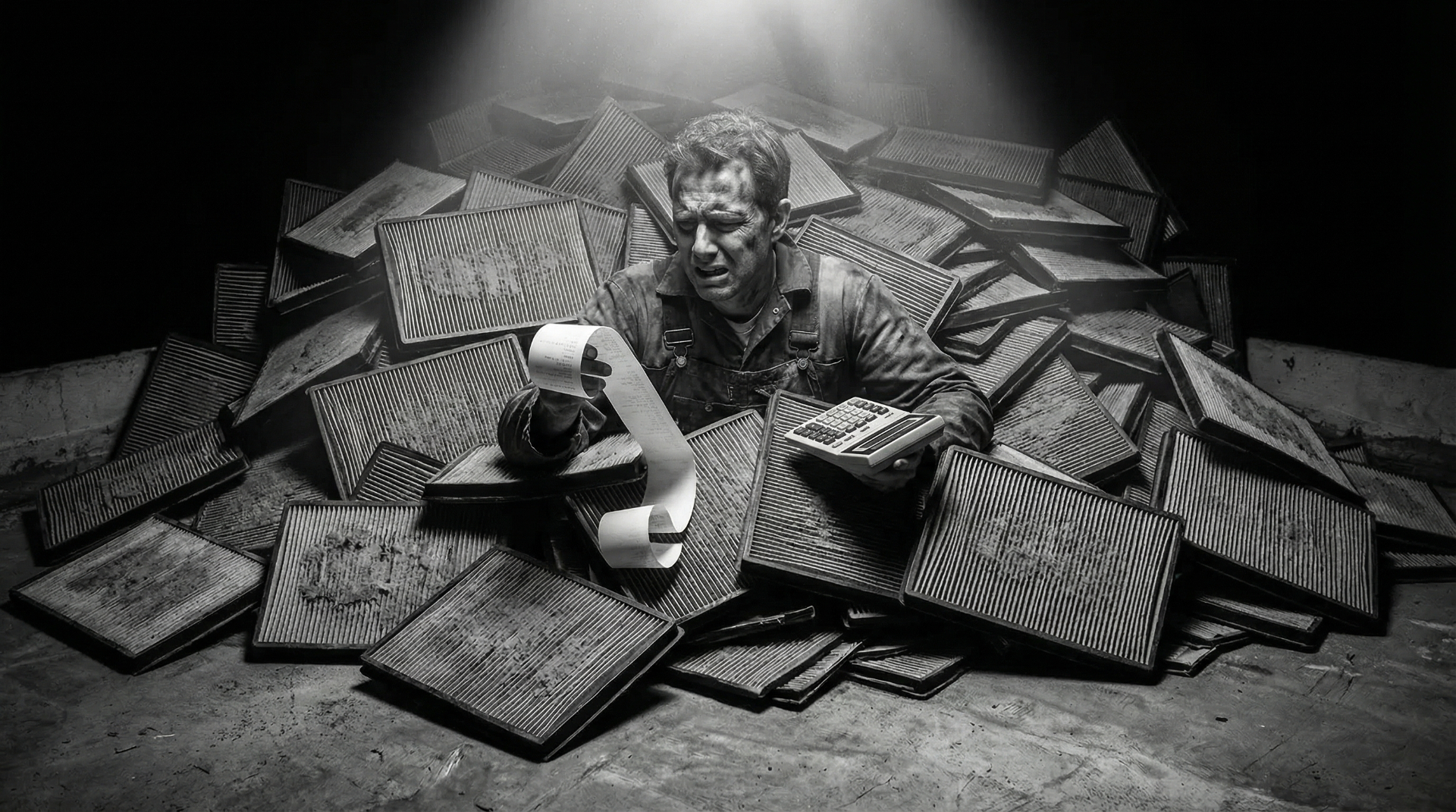
The true cost of "no recurring costs"
The Math:
A box of high-quality HEPA bags costs about $20 and lasts the average home a year.
A replacement HEPA filter set costs $30-$60. If you replace it annually (as you should), you're spending more money.
The "Dust Cloud" Reality
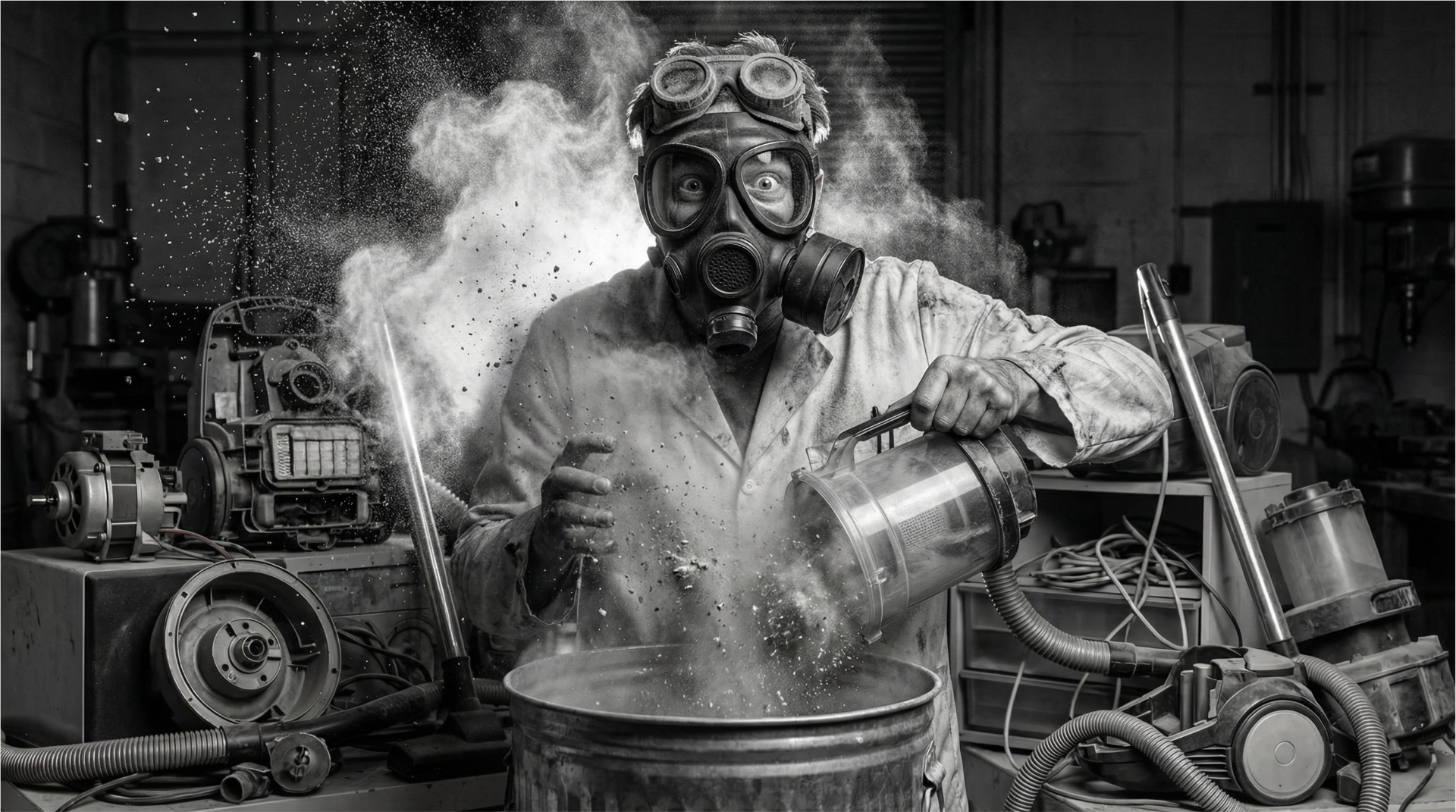
Protective equipment recommended (not included)
Emptying a bagless vacuum is a hazardous event. You stand over your trash can, press a button, and pray.
POOF.
A mushroom cloud of fine dust—the very dust you just spent 20 minutes meticulously removing from your carpet—explodes back into the air. You breathe it in. It settles on your clothes. It drifts back onto the floor.
With a bagged vacuum, the process is boring. You open the canister, slide out the sealed bag, and drop it in the trash. No dust. No mess. No drama. It is the difference between taking out the trash and dumping the trash on your own head.
Suction Power: The Silent Killer
Bagless vacuums lose suction. It is a physical inevitability.
As the bin fills up, the airflow is restricted. But worse, as the pre-motor filters get clogged with fine dust (which happens much faster than you think), the motor has to work harder to pull air through. This heat and strain shorten the life of the motor.
Bagged vacuums, particularly high-end models like Miele or SEBO, are designed so that the bag itself is the primary filter. As the bag fills, the surface area remains relatively open until it is absolutely packed. And because the air is filtered before it hits the motor, the internal components stay pristine for decades.

The evidence speaks for itself
The Verdict
Buy a Bagless Vacuum If:
- •You enjoy seeing exactly how much dog hair is on your floor.
- •You like the thrill of dodging a dust cloud.
- •You are diligent about washing filters every single month.
Buy a Bagged Vacuum If:
- •You have allergies.
- •You want your house to actually be clean.
- •You want a machine that will last 15+ years.
Winner
Bagged.
It's not sexy, but it works. And in the world of cleaning, "working" is the only metric that matters.