
The Ultimate Vacuum Buying Guide
Stop guessing. Start cleaning. Here is everything you need to know to choose the perfect vacuum for your home, floor type, and sanity. Whether you're battling pet hair, maintaining hardwood floors, or just want a robot to do it all for you, this comprehensive guide will help you make the right choice.
Quick Start: What's Your Priority?
Find your perfect match in seconds
I have pets everywhere
You need strong suction and tangle-free brush rolls.
I hate vacuuming
Let a robot do the work for you.
I have a multi-story home
You need a lightweight stick or a canister for stairs.
I want deep carpet cleaning
Nothing beats the raw power of a corded upright.
Choose Your Weapon: Types of Vacuums
The first step is deciding on the form factor. Each type has distinct advantages depending on your lifestyle and home layout.
Upright Vacuums
Best for: Large homes with lots of carpet
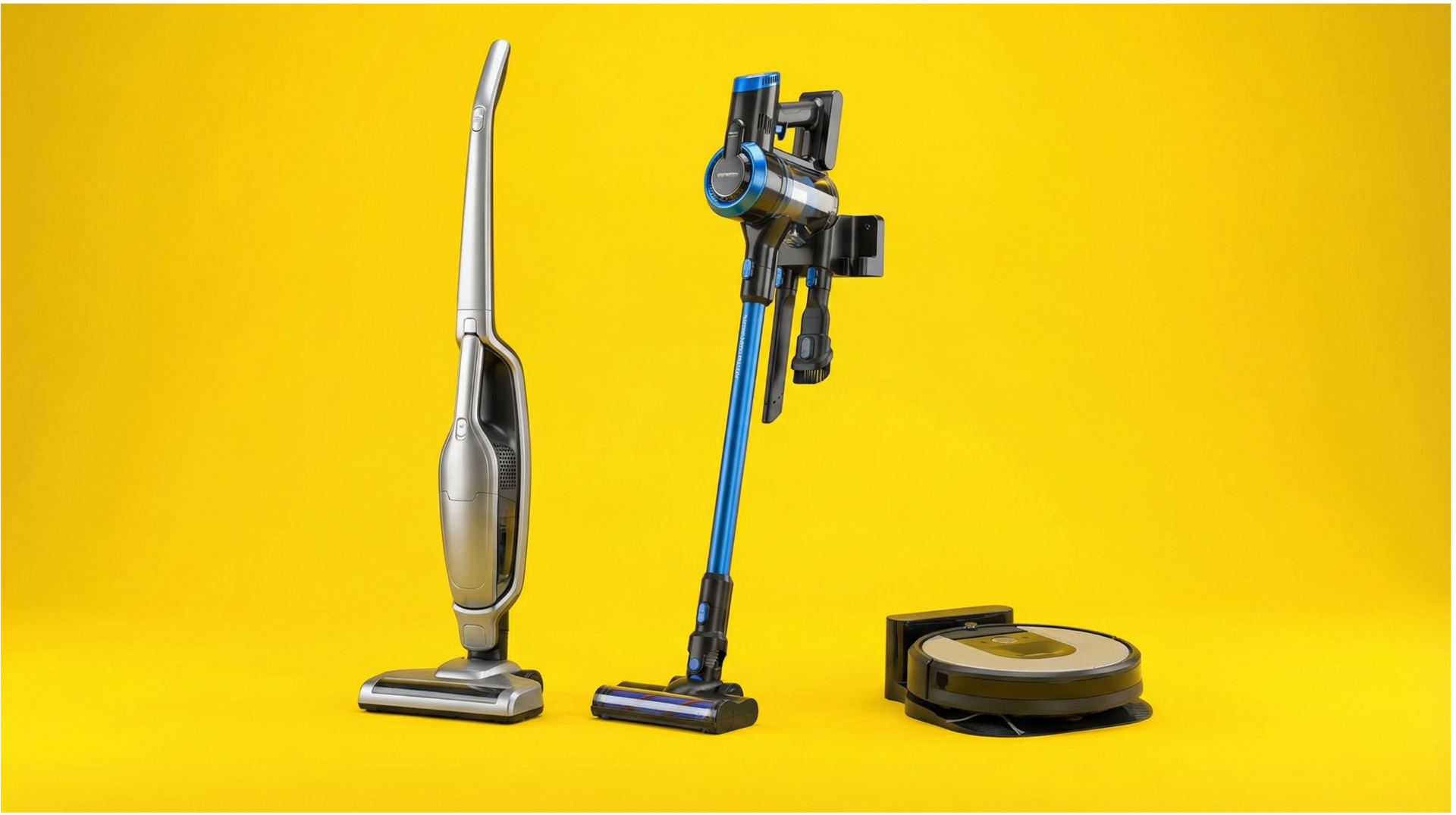
The classic powerhouse. Uprights generally offer the strongest suction and widest cleaning paths, making them the go-to choice for homes with extensive carpeting. They excel at deep cleaning and can tackle embedded dirt that other vacuums might miss. However, they can be heavy to maneuver and difficult to lug up and down stairs. Modern uprights often come with swivel steering and lift-away canisters to improve versatility.
- Powerful suction
- Wide cleaning path
- Deep carpet cleaning
- Heavy to carry
- Less maneuverable
- Can be noisy
Cordless Stick Vacuums
Best for: Quick cleanups, apartments, and convenience
Lightweight and incredibly versatile, cordless stick vacuums have revolutionized home cleaning. Modern models rival uprights in suction power but run on rechargeable batteries, which limits runtime to 20-60 minutes depending on the model and power setting. They're perfect for daily maintenance, quick pickups, and reaching high places like ceiling fans and curtains. Many convert to handheld mode for furniture and car cleaning.
- Lightweight and portable
- No cord to manage
- Converts to handheld
- Limited battery life
- Smaller dust bin
- May need multiple charges for large homes
Robot Vacuums
Best for: "Set it and forget it" maintenance
These autonomous cleaning machines keep your floors tidy while you're away at work or running errands. High-end models feature advanced LiDAR mapping, obstacle avoidance (including pet waste detection), and can even mop your floors. Most connect to smartphone apps for scheduling and zone cleaning. While they can't replace a deep clean entirely, they excel at daily maintenance and keeping dust and debris at bay between more thorough cleaning sessions.
- Fully autonomous
- Scheduled cleaning
- Great for daily maintenance
- Higher upfront cost
- May get stuck
- Not as powerful as uprights
Canister Vacuums
Best for: Versatile cleaning across all floor types
Canister vacuums separate the motor and dust collection unit from the cleaning head, connected by a flexible hose. This design makes them exceptionally versatile and easier to maneuver on stairs and furniture. They often provide powerful suction comparable to uprights while being quieter in operation. The main drawback is dragging the canister behind you, though many feature smooth-rolling wheels and retractable cords.
- Versatile attachments
- Great for stairs
- Often quieter
- Can be cumbersome
- Takes more storage space
- Learning curve
Handheld Vacuums
Best for: Spot cleaning and small messes
Compact and convenient, handheld vacuums are designed for quick cleanups of small messes. They're perfect for cleaning car interiors, upholstery, stairs, and hard-to-reach spots. Most are cordless and charge on a dock. While they lack the power for whole-home cleaning, every household benefits from having one on hand for spills, crumbs, and pet hair on furniture.
- Compact and portable
- Quick to grab
- Great for spot cleaning
- Small capacity
- Limited power
- Short battery life
Bagged vs. Bagless: The Great Debate
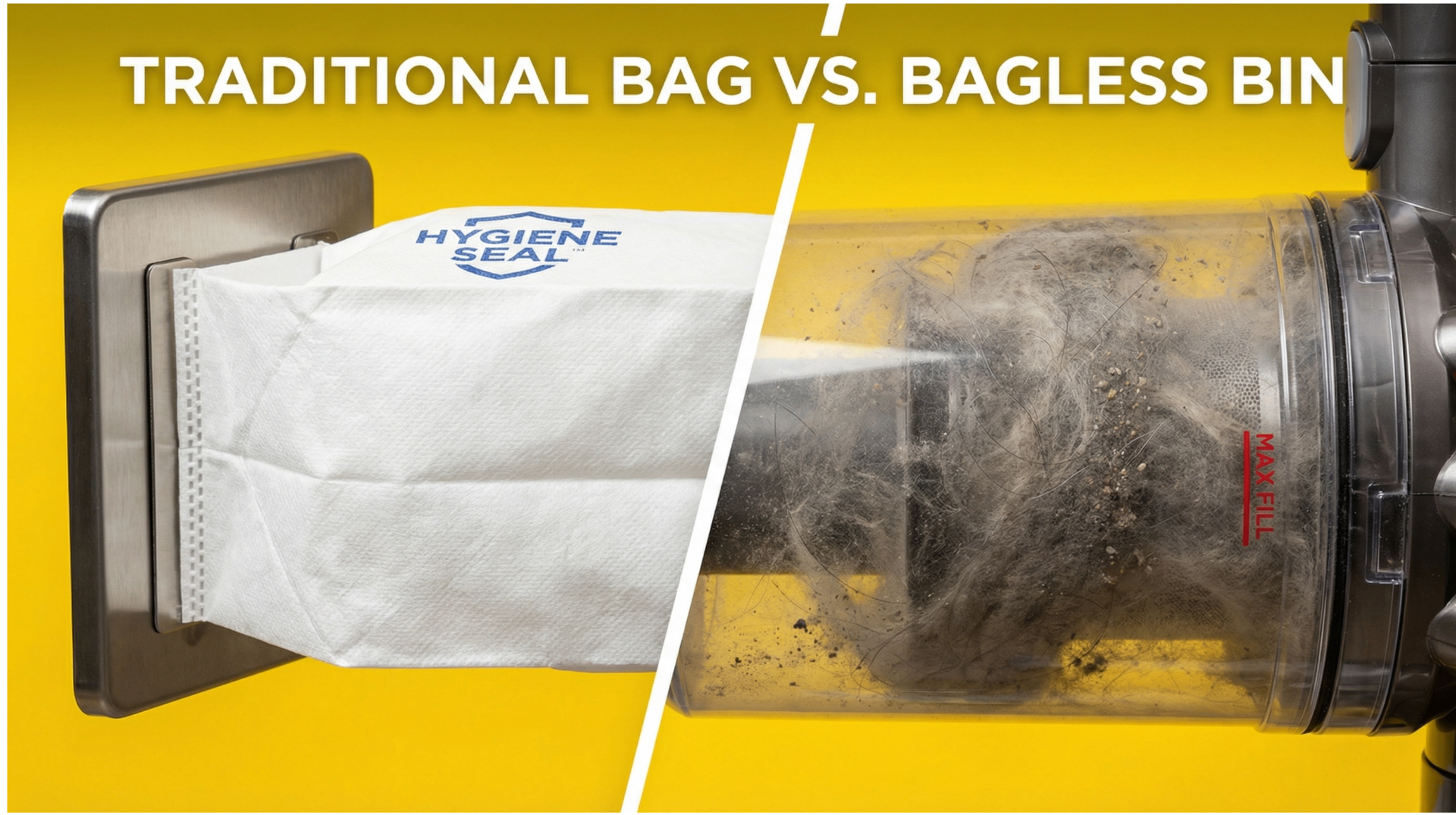
This choice often comes down to allergies and convenience.
Bagged Vacuums
The hygienic choice. Dirt is sealed in a bag, so you never touch the dust. When it's full, you toss it. Ideal for allergy sufferers as it keeps dust out of the air.
Bagless Vacuums
The economical choice. You save money on bags, but emptying the dust bin can release a cloud of dust back into your home. Requires more filter maintenance.
Key Features That Actually Matter
Ignore the marketing fluff. These are the specs you should actually pay attention to.
Suction Power (Pa or AW)
Suction power determines how effectively a vacuum can lift dirt and debris from surfaces. It's measured in Pascals (Pa) for robot vacuums and Air Watts (AW) for corded and cordless models. Higher numbers generally mean better cleaning performance, especially on carpets where dirt gets embedded in fibers.
- Robot Vacuums: Look for at least 5,000Pa for carpets, 10,000Pa+ for homes with pets
- Stick Vacuums: 100AW is a good baseline, 150AW+ for serious carpet cleaning
- Uprights: 200-300AW is typical for high-performance models
- Pro tip: Adjustable suction settings help preserve battery life and protect delicate rugs
Filtration (HEPA)
If you have allergies, asthma, or pets, a HEPA filter is non-negotiable. True HEPA filters trap 99.97% of particles as small as 0.3 microns, including dust mites, pollen, pet dander, and mold spores. This ensures the air coming out of the vacuum is significantly cleaner than the air going in. Look for vacuums with sealed systems that prevent air from escaping around the filter.
- True HEPA vs. HEPA-type: Only 'True HEPA' meets the 99.97% standard
- Replace filters every 6-12 months for optimal performance
- Washable pre-filters help extend HEPA filter lifespan
Brush Roll Type
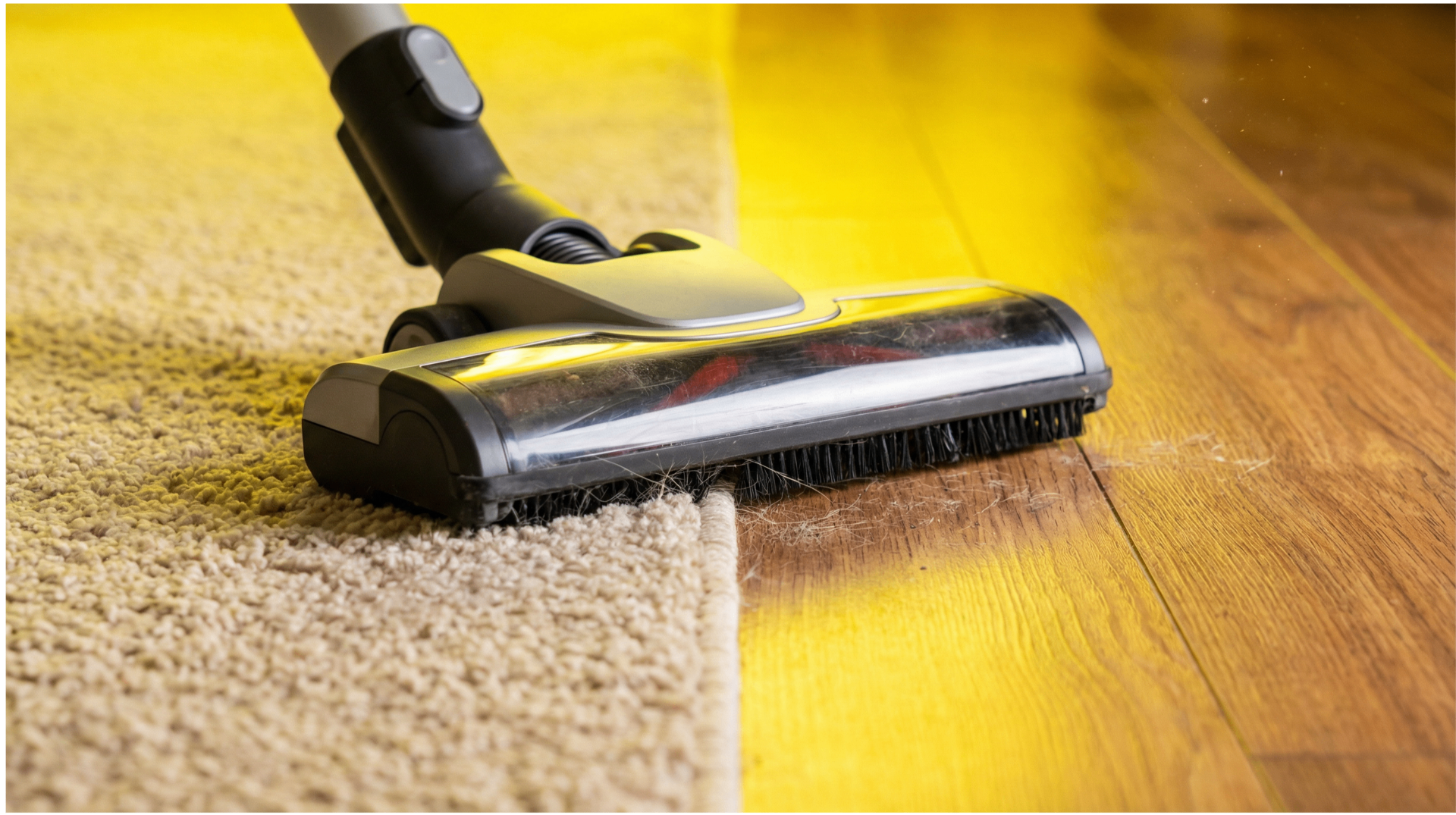
The brush roll is where the cleaning action happens, and different types work better for different floors and situations. Standard bristle brushes are excellent for agitating carpet fibers but can scratch hardwood. Soft roller brushes are gentle on hard floors while still picking up fine dust. Anti-tangle rubber brushes are a game-changer for pet owners, preventing hair from wrapping around the brush.
- Bristle brush: Best for deep carpet cleaning
- Soft roller: Ideal for hardwood, tile, and vinyl
- Rubber/Anti-tangle: Perfect for homes with pets or long-haired occupants
- Dual brush systems: Some vacuums offer both for multi-surface homes
Battery Life & Runtime
For cordless vacuums, battery life is crucial. Most stick vacuums offer 20-60 minutes of runtime, but this varies dramatically based on power mode. High-power or 'boost' mode can drain batteries in under 10 minutes. Consider your home size: a 1,500 sq ft home typically takes 20-30 minutes to vacuum, so plan accordingly.
- Look for removable batteries if you have a large home
- Fast charging (under 3 hours) is a valuable feature
- Runtime specs are usually measured on lowest power setting
Matching Vacuum to Floor Type
| Floor Type | Recommended | Why? |
|---|---|---|
| Wall-to-Wall Carpet | Upright or Canister | Deep agitation is needed to pull dirt from fibers. |
| Hardwood / Tile | Stick or Robot | Suction is more important than agitation; avoid scratching. |
| Mixed / Area Rugs | Stick with Auto-Sense | Automatically adjusts suction between surfaces. |
Ready to Choose?
We've tested and rated the best models on the market so you don't have to.
Browse All Reviews