
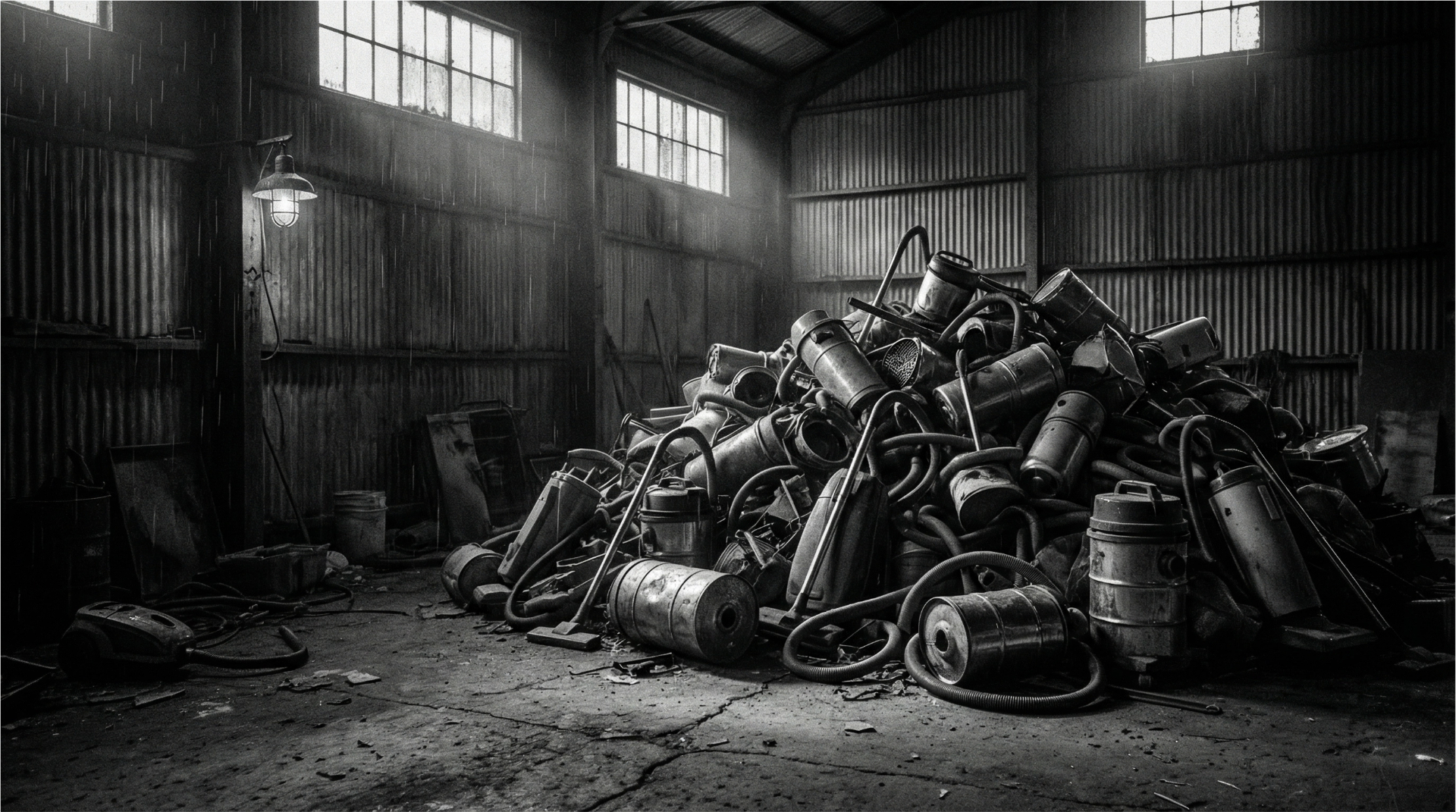
Released in the mid-2000s, "The One" was supposed to be the iPhone of vacuum cleaners. It was hyped as a revolutionary, all-in-one cleaning system that would render every other machine obsolete. Instead, it became a cautionary tale of over-engineering, hubris, and dust-scattering incompetence.
The Hype Machine
Hoover spent years developing "The One." Rumors swirled in the industry that they had cracked the code—a vacuum that was sleek, futuristic, and infinitely adaptable. Retailers were terrified. Competitors were shaking in their boots.
The marketing pitch was seductive: a streamlined, modular system that could transform from an upright to a canister to a stick vac. It was the Swiss Army Knife of cleaning.
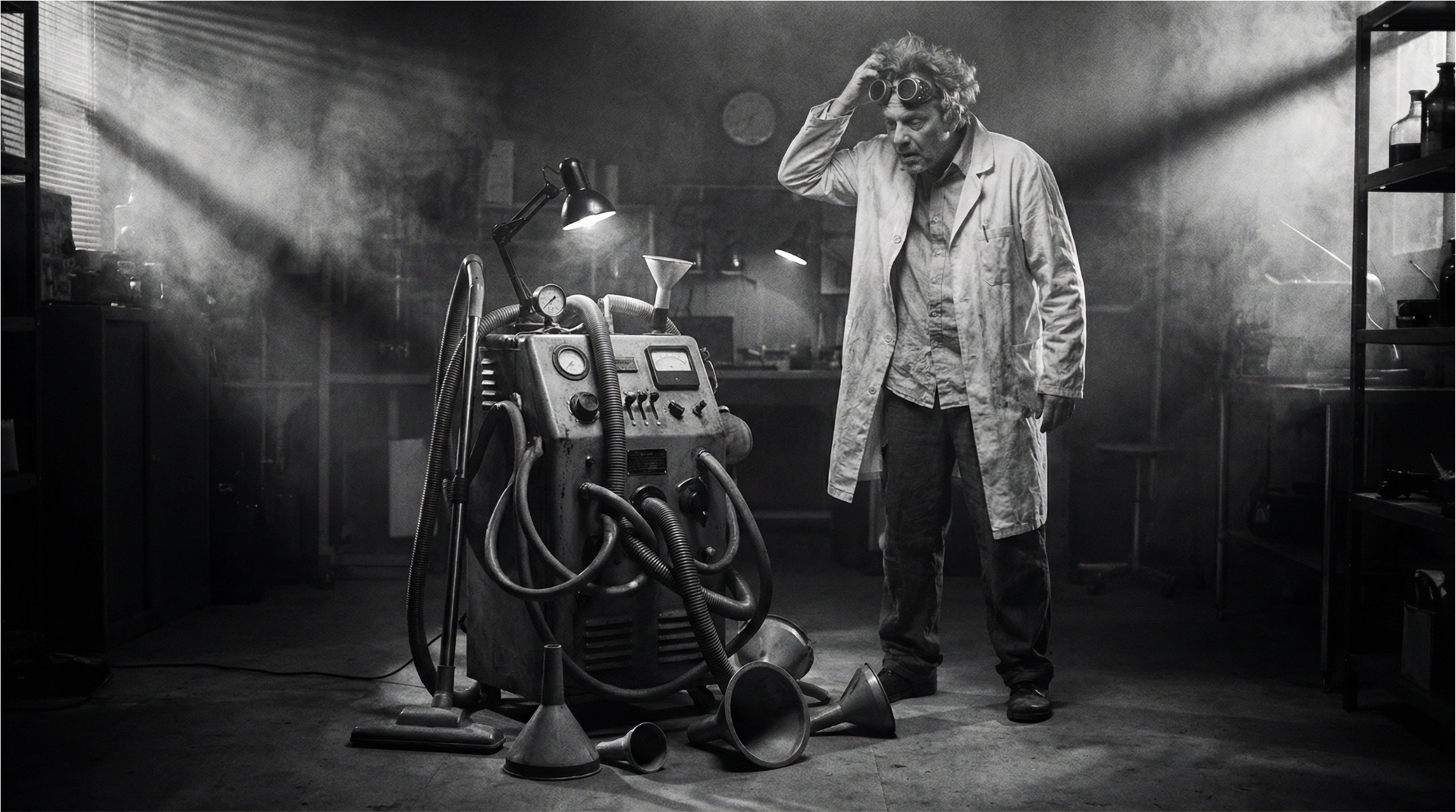
"We were so preoccupied with whether we could, we didn't stop to think if we should."
The Reality Check
When it finally hit shelves, the reality was less "Swiss Army Knife" and more "Plastic Spork."
1. The "Cyclone" That Wasn't
The central selling point was its futuristic cyclonic filtration system. In practice, it was a clogging nightmare. The design was so convoluted that dust didn't spin; it just got stuck. Users reported the bin clogging instantly, requiring manual excavation of dirt after every single room.
2. The Brushroll of Despair
A vacuum's primary job is to agitate carpet fibers. "The One" featured a brushroll with bristles so soft they were described by one reviewer as "like baby hair." Instead of lifting dirt, it gently caressed the carpet.
Even worse, the "hard floor mode" didn't actually turn the brushroll off. Instead, it lowered a set of stiff brushes around the spinning roll. The result? It didn't pick up debris; it played hockey with it, scattering Cheerios and cat litter across the kitchen floor in a chaotic radius.
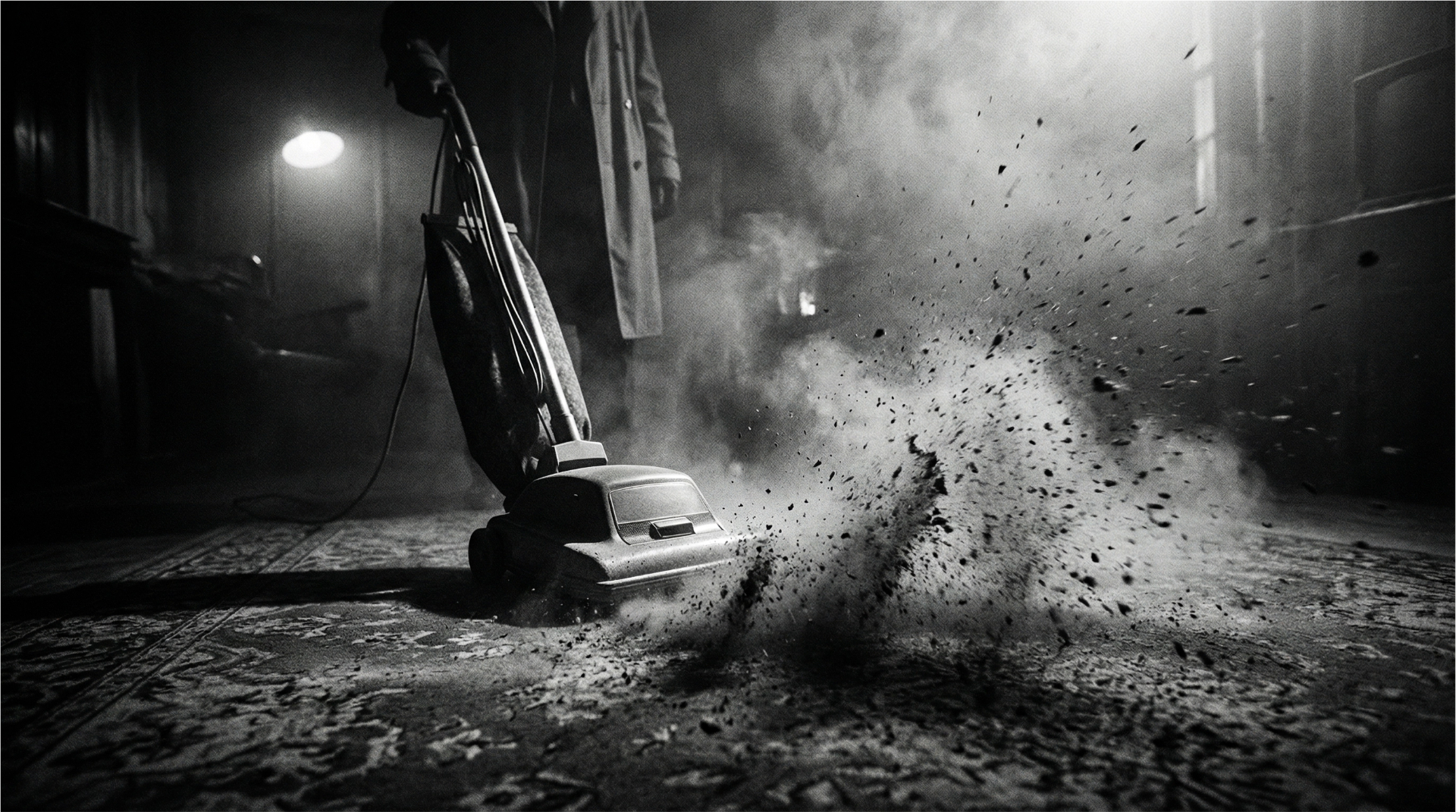
Actual footage of "The One" in action. The evidence speaks for itself.
3. The Return Rate Record
Legend has it that at some electronics retailers, the return rate for "The One" approached 100%. It wasn't just that people didn't like it; it was that the machine fundamentally failed to perform its basic function. It was a $300 noise machine that rearranged dirt rather than removing it.
The Legacy
Hoover scrambled to fix it. They released updated versions, tweaked the design, and slashed the price. But the damage was done. "The One" had become a punchline.
It stands today as a monument to the danger of "feature creep." In trying to be everything—an upright, a canister, a stick, a revolution—it failed to be the one thing it needed to be: a vacuum cleaner.
So, the next time you're frustrated that your current vacuum is a little heavy or the cord is a bit short, just remember: it could be worse.
You could be the owner of "The One."